Data Centre: Synapse

The AUC has closed Synapse’s application for deficiencies, and it must now re-apply. The development permit has been withdrawn by the applicant.

The Town will schedule further public engagement once there is an active development application from either data centre developer.

Proposed Data Centre Projects

The Town of Olds is trying to attract data centres to support our local economy and align with Provincial Priorities. Any data centre development must be done responsibly and there are various levels of responsibilities and approvals.

Two private data centre projects are proposed in Olds:

More information can be found at Data Centre Development.

Information Covered On This Page

What and Why of Data Centres

External Images

Proposed Site and Preliminary Landscaping Map

Roles and Responsibilities

How Decisions are Made

Town of Old Process: What’s Happening Now

Issues & Decisions

Why Council Supports Attracting Data Centres

Preparing for Growth

Safety & Environmental Protection

Noise Impact Assessment

Myths & Misinformation

What are AI Data Centres and Why AI Data Centres Are Interested in Alberta

Every time you refresh a social media feed, ask a chatbot for a recipe, or see a ‘recommended for you’ product while shopping online, you are pinging an AI data centre. Unlike traditional server farms that simply store your emails or photos, these facilities can carry out these traditional uses while also being specialized industrial hubs packed with high-performance processors designed to think and "learn."

The growth of AI Data Centres is skyrocketing because our digital lifestyle has shifted from passive browsing to active, real-time intelligence. Whether it's an algorithm filtering your spam, a retail site predicting your next purchase, asking Google or ChatGPT a question, or a map app calculating the fastest route home, these everyday conveniences require immense compute power. As millions of people simultaneously demand these instant, sophisticated responses, the physical infrastructure supporting the internet must expand.

Governments and industry view modern data centres as critical economic and strategic assets. In Canada, both the Federal Government and Government of Alberta are pushing hard to attract this investment.

The Government of Canada announced several billion dollars for AI data centre attraction and support, as it aligns with priorities around diversifying international relationships, increasing economic growth, and achieving data sovereignty (storing sensitive and strategic data under in Canada rather than in other countries).

  • Sovereign AI Compute Strategy: A $2 billion investment aimed at building domestic compute capacity through three main programs:
    • AI Compute Challenge: $700 million in federal investment to attract and expand AI data centre capacity in Canada.
    • SCIP Infrastructure Program: $705 million to build a new Canadian AI supercomputing system that will support researchers, industry, and government with high-performance compute capacity.
    • AI Compute Access Fund: $300 million allocated, this fund helps small and medium-sized Canadian firms access advanced AI compute resources.

Alberta’s AI Data Centres Strategy aims to attract $100 billion in private investment over five years by focusing on energy reliability, regulatory speed, and cost advantages. Alberta’s cold climate, abundance of natural gas, and strong fibre backbone are existing competitive advantages; new provincial initiatives include:

  • Bring Your Own Power Policy (Bill 8): The Utilities Statutes Amendment Act, 2025 (formerly Bill 8) encourages data centres to self-supply their own electricity. Developers who generate their own power can receive fast-tracked approvals.
  • Hardware Levy and Tax Credits: Under the Financial Statutes Amendment Act, 2025 (Bill 12), the province is implementing a 2% computer hardware levy starting December 31, 2026. This levy is fully creditable against Alberta corporate income tax, essentially rewarding companies that remain profitable in the province.
  • Reduced Levy for Self-Supply: To encourage grid stability, the hardware levy is reduced to 1% for data centres that provide their own power supply and is 0% for projects that are entirely off grid.
  • Regulatory Modernization: The province is conducting a review to shorten regulatory timelines and has established an AI Data Centre Concierge Program to provide a direct gateway for large investors.

For the Town of Olds, we know we have competitive advantages, including available industrial-zoned lands, fibre connectivity, and nearby natural gas sources. The Town’s alignment with these federal and provincial priorities is about preparation, not unconditional endorsement. Data centres represent a potential opportunity for economic growth, assessment diversification, and participation in Canada’s expanding digital and AI economy. Council’s focus remains on ensuring that any such development can be done responsibly, with careful consideration of infrastructure capacity, environmental impacts, and community well-being. Check out the Town’s Data Centre Development webpage for the latest information.

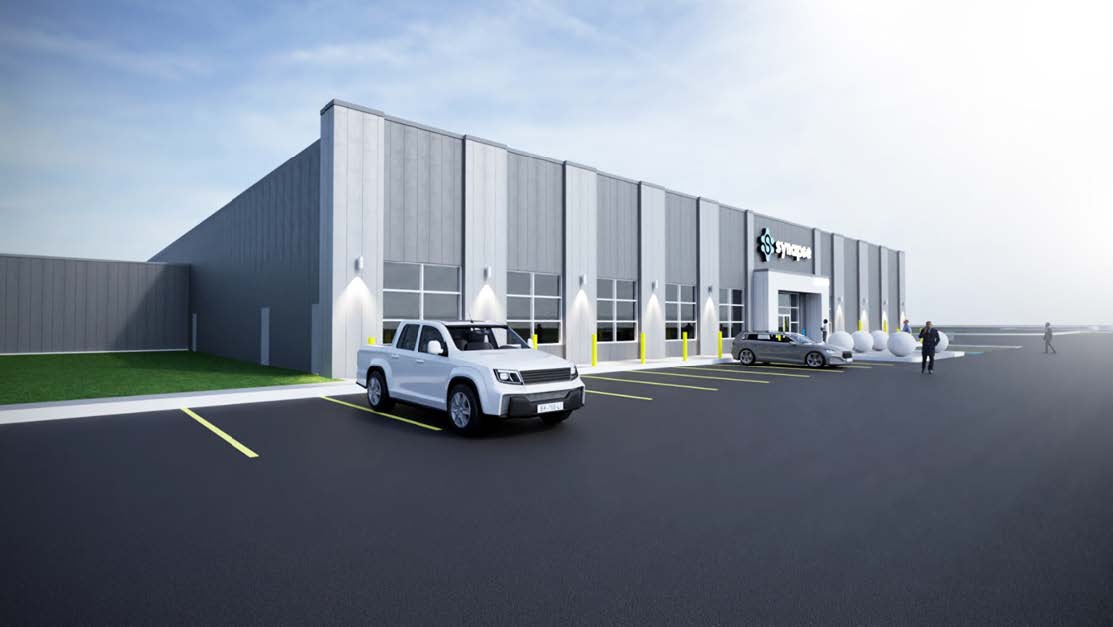
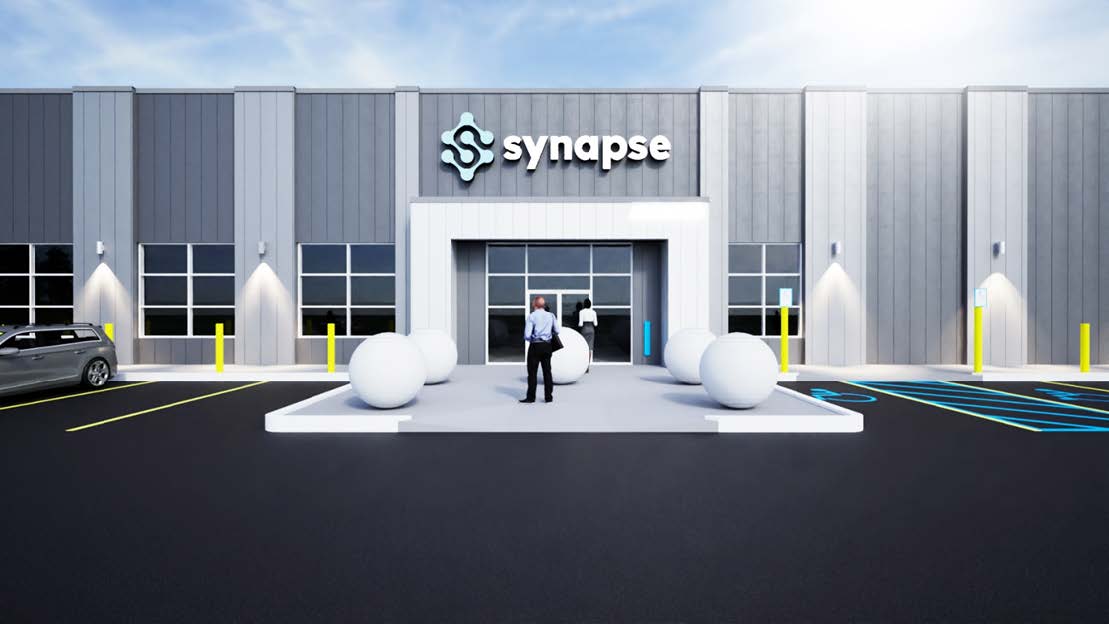
Synapse Inc

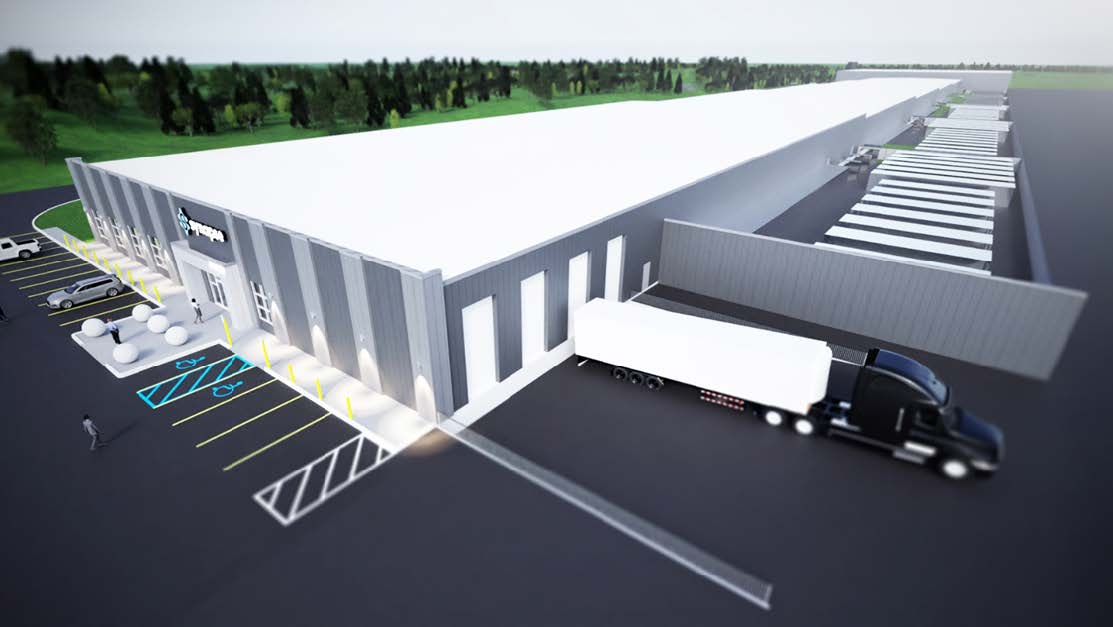
Synapse Proposed Site Map

Preliminary Landscaping Plan Excerpt

Roles and Responsibilities

Town of Olds

  • Land use and zoning.
  • Municipal servicing and compatibility.
  • Noise, Light, and Visual Impacts.

Province of Alberta:

  • Regulates energy facilities and major industrial approvals.
  • Sets environmental, health, and safety standards.
  • Sets Data Centre Policy & Attracts Data Centres to the Province.

Alberta Utilities Commission (AUC)

  • Regulates natural gas usage and co-location of facilities at data centres.
  • Requires a public engagement process to occur, which has begun.
  • Also requires emissions testing and noise impact assessments prior to approval.

Alberta Environment and Protected Areas (AEP)

  • Regulates water usage for Data Centres and emissions guidelines.
  • Requires a public notification process, which is expected to start soon.
  • Regulates emissions, including approvals and monitoring.

How Decisions Are Made

This is a multi-layered process that takes can take years to complete. These are proposed data centres and public input it part of the process.

  1. A private company identifies Alberta as a potential location
    The Province of Alberta actively promotes data centre investment as part of its economic strategy.
  2. A developer approaches a municipality
    A private developer explores specific communities that may meet their needs for land, servicing, and location.
  3. Land is secured
    The developer may purchase or option private land within the community.
  4. Municipal planning review begins
    The Town reviews whether the proposed use fits existing zoning and land use policies.
  5. Public notice and public input
    Residents are notified through Town communication channels and have opportunities to provide input to Council.
  6. Council’s role
    • Council considers land use, servicing, compatibility, and community impacts.
    • Council can approve, refuse, or impose conditions within its municipal authority.
  7. Provincial regulatory review
    Separate from municipal processes, the developer must apply to provincial regulators.
    • Alberta Utilities Commission (AUC)
    • Alberta Environment and Protected Areas (AEP)
  8. Provincial decision
    The Province may approve, impose conditions, or deny the project.

IMPORTANT! Municipal approval alone does not authorize construction. Multiple levels of approval are also required.

Town of Olds Process - What's Happening Now?

Rezoning

  • All industrial areas in the Town of Olds are zoned for data centres (since June 2025)
  • January 26th rezoned to remove highway commercial uses to support large industrial development in the Northeast Area.
  • February 9th Public Hearing to zone 1 parcel to industrial (currently zoned urban reserve and ‘future industrial’ in the Town’s Municipal Development Plan)

Development Permit

  • The Synapse Development Permit application was withdrawn on March 10. There is no active development permit application currently.
  • Data centres are considered a ‘Discretionary Use’, meaning public circulation will occur.
  • Circulation will begin in March. It will be going out to residents and external agencies for comment. This comment period will be open until the permit is issued, but for at least a minimum of 21 days from when sent.
  • The application is currently deemed incomplete. Once the remaining requested items are submitted by the applicant and the application is deemed complete, we must issue a decision within 40 days.
  • Once a decision has been issued (either approved with conditions or refused), there is a 21-day appeal period during which either the applicant can appeal a refusal or any condition of approval, or anybody else can appeal an approval.

Building Permit

  • No building permit applications have been submitted yet. This typically takes place following the development permit process.
  • The building permit review process ensures that all structures are constructed in compliance with all federal and provincial safety standards, including fire and building codes.
  • Inspections take place at key stages throughout construction and permits are not closed until full compliance is achieved.

Public Engagements & Information to Date

  • May & June 2025
    • Land Use Bylaw Amendment + Public Hearing to add a Data Centre use to all light industrial districts.
  • June - October 2025
    • Land Use Bylaw Review Process to move Data Centres from a permitted use to a discretionary use, to allow more control over their development.
    • Online surveys, open houses, pop-up engagements, and a public hearing were held.
  • January 12, 2026 Council Presentation
    • Door knocking by Town Councillors in the immediate area of the proposed Synapse development.
  • February 4, 2026 Open House
    • Approximately 200 people attended the two drop-in sessions at the Olds Sportsplex to hear information, ask questions, and share concerns.
  • February 5 Public Engagement Session (Developer Led / No Town Involvement)
    • Several hundred people attended 2 sessions hosted by the developer to hear project specifics.
  • February 9, 2026 Public Hearing on Bylaw 2026-07
    • This bylaw zoned the NW quarter section of the NE industrial area as light industrial.
    • This quarter section was already zoned as future industrial by the Town's long term statutory plans.

Future & Current Public Engagements

  • To be determined. The Town will schedule further public engagement once there is an active development application from either data centre developer.

Issues and Decisions

This is the most accurate information the Town has as of this document's publication date. Details will evolve and change and we will provides such updates as soon as possible.

Who approves it?

  • Alberta Environment & Protected Areas approves all industrial water use.

What do we know so far?

  • Synapse is proposing a closed-loop system
  • There would be a one-time fill would take an estimated 500 – 1,000 cubic meters of water to fill each building
  • The natural gas co-location, an estimated 1,200 cubic meters a month is required, representing approximately 1.5% of the Town’s current monthly consumption.
  • The Town uses approximately 80,000 cubic meters of water a month.
  • The Mountain View Regional Water Services Commission (which provides water to Olds) holds an annual allocation of approximately 9 million cubic meters of water. Currently, the commission distributes about 50% of that annual allocation to its members, meaning there is adequate supply in our region for potable water.

Who approves it?

  • Alberta Utilities Commission (AUC)
  • Alberta Energy System Regulation (AESO)

What do we know so far?

  • Synapse does not propose to connect to the grid for computing power nor redundancy.
  • Data District does propose a partial grid connection based on previously built & approved electrical capacity.

Where will Synapse get its power from?

  • Natural gas.

Who approves it?

  • Alberta Utilities Commission (AUC)

What do we know so far?

  • Synapse plans to acquire natural gas from nearby suppliers to generate 1.4GW of electricity for computing purposes.

What about noise and emissions?

  • Both require assessments by and approvals from the AUC.

Who approves it?

  • Alberta Transportation & Economic Corridors (ATEC)

What do we know so far?

  • A Traffic Impact Assessment was completed for this area during the Area Structure Plan (ASP).
  • ATEC is currently reviewing it.
  • There will be access points from Hwy 2A and Hwy 27 to minimize the congestion at the 2A/27 intersection.

Why Council Supports Attracting Data Centres

Community-Level Benefits

  • Broader tax base
  • Less pressure on residential taxes
  • Long-term financial stability
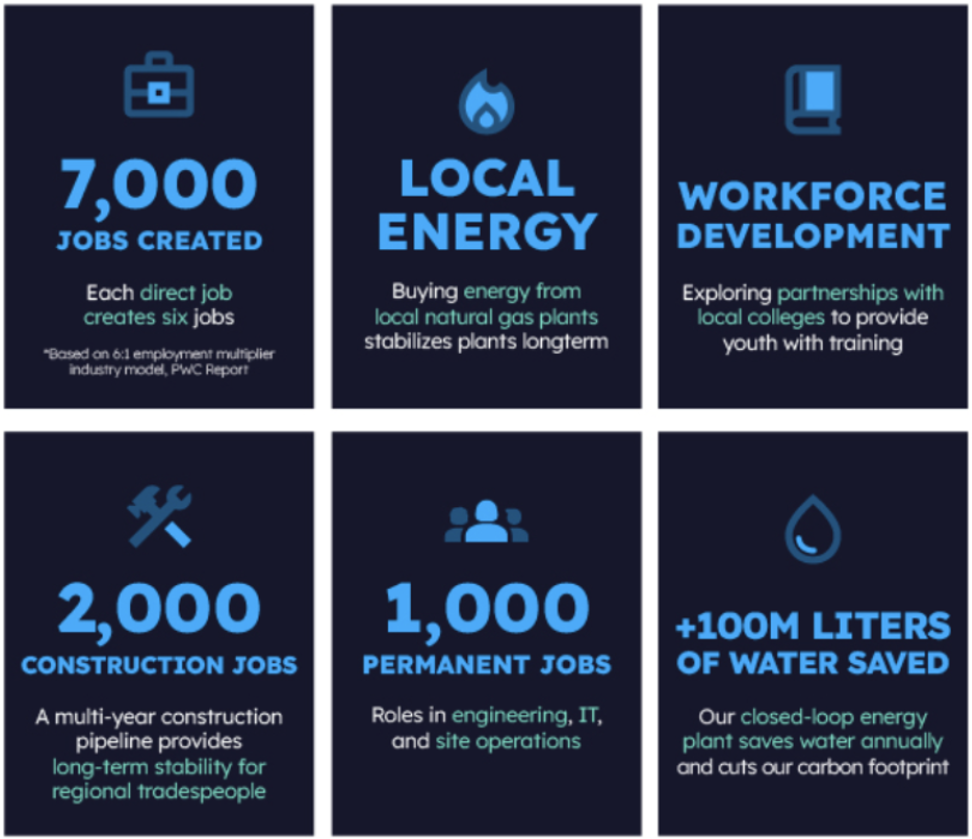
  • Projected 2,000 temporary construction jobs (staged over several years)
  • Estimated 1,000 permanent jobs at full scale (2+ years)
  • Aligns with provincial economic strategy

Big Picture

The goal is thoughtful growth, not growth at any cost. Growth helps maintain the services residents value as costs rise.

Preparing for Potential Growth

Economic growth is important for our Town to remain vibrant and financially sustainable.

  • We want to grow responsibly.
  • The Province will never build an additional school or expand a hospital in a town that is not growing
  • Housing developers, small businesses, doctors and others want to invest in a community that is growing and seeks to progress.

Housing

These developments won’t appear or scale overnight nor will every employee live in Olds. However, in 2025 the Town adopted our first housing strategy and has seen 2 years of record housing starts. We are working hard to keep this momentum going and expect more housing announcements soon.

Health Care

  • Doctors: With the addition of a 3rd medical clinic in 2025, there are currently no active people on the wait list for a family doctor. There is capacity here and we will work to ensure the situation remains that way.
  • Hospital: The Olds Hospital will soon begin a $21 million expansion on a dialysis unit, which will also alleviate acute care pressures. But this is not enough. We continue to lobby the province on expanding surgical capacity as well.

Schools

There is a plan with both school divisions to construct 2 new schools in the coming decade.

  • Public School: We have land dedicated in the Vistas Community for a future public school, which is currently on Chinook’s Edge School Division’s priority list.
  • Catholic School: Red Deer Catholic has a longer time frame, as Holy Trinity School is not operating at capacity; however, we will remain engaged with them as demand shifts.

Public Transit

A transit study commenced in January 2026 and will determine the most realistic ‘next step’ for public transportation in Olds. This will help us understand current demand and service gaps, what level of population growth may trigger a higher service level, and provide recommendations for both incremental improvements and long-term planning to ensure transit needs remain addressed.

The Town of Olds conducted a Community Transit Service Study on February 9, 2026, to understand the mobility needs of the Olds community and explore the feasibility of implementing a right-sized transit solution.

Watch for future engagement opportunities on transit and other important community topics at www.olds.ca/engagement

Safety & Environmental Protection

How Risks Are Regulated And Managed

Data centres are regulated industrial facilities. They must meet provincial safety and environmental standards before they can be approved or operate.

  • Fire suppression systems, alarms, and emergency response plans are required.
  • Local fire services review site access, hydrant locations, and response considerations as part of development permitting.
  • The emergency response risks posed by data centres are similar to those posed by other industrial facilities our fire department protects.
  • The Olds Fire Department has its own fire training facility where members regularly practice industrial response scenarios.

Air Quality & Emissions

  • Any on-site power generation other backup systems must meet provincial air emission limits and regulations through the Alberta Ambient Air Quality Objectives Compliance.

  • Noise must comply with provincial noise standards.
  • Noise impact assessment is being conducted and must meet or exceed AUC Rule 012 Noise Control
  • Further noise mitigation measures will be imposed through the Town development process.
  • Monitoring of noise impacts will continue once facility operation commences.

  • All data centre water usage proposed to date proposes closed-loop water systems for cooling. Along with water use for natural gas infrastructure and consumption by staff, our current usage for the Synapse proposal would equal about 3% of the Town's current water consumption.
  • Stormwater and spill prevention plans are required.
  • Environmental protection measures are reviewed through provincial processes.
  • Wetland disturbance and restoration is controlled by Alberta Environment and Protected Areas.

  • Electrical systems must meet provincial and national safety codes.
  • Worker safety is regulated by Alberta Occupational Health and Safety.

Noise Impact Assessment

The following maps are figures drawn from the preliminary Noise Impact Assessment provided to the Town. Figure 4A shows the sound pressure levels (SPL) from only the facility itself after proposed noise control measures. Figure 4B shows the cumulative sound pressure levels including the facility and ambient volumes from other uses and roadways, also showing levels after noise control measures are applied.

Figure 4A

Figure 4B

Myths & Misinformation

Are the data centres already approved?

  • No data centres have been approved. Two are being proposed.

Is the Town of Olds financially involved in data centre development or offering tax breaks?

  • No, the Town of Olds is not financially involved in either data centre proposal is not offering any tax breaks to either developer.

Would these projects have saved O-NET and paid off its debt?

  • No, data centres will not connect to the O-NET fibre, but directly to the transit fibre connecting Olds to Calgary.

What if the data centres go bankrupt and the buildings abandoned?

  • This is a risk with any industrial development but even vacant buildings owe property taxes and are required to maintain their grounds according to Town bylaws.

Are data centres harmful to human health?

  • Data centres do not emit harmful radiation or frequencies.
  • For natural gas co-location, strict emissions testing needs to be done prior to approval.

Can the Town adequately respond to potential fires at a data centre?

  • Yes. Data centres are designed with multiple layers of fire prevention and suppression built into the facility.
  • The Olds Fire Department is trained and equipped to respond to industrial and commercial fires and already plans for facilities with specialized risks.

Will this development affect property values in Olds?

  • While no solid information exists for Canada, the Town believes that higher economic activity generally results in higher property values. But regarding data centre and property values, one relevant study from November 2025 (Keither Waters and Terry Clower) on the housing market near Virginia’s ‘Data Centre Alley’, found homes near data centres saw consistently higher values than homes further away from them.

What about preserving farmland?

  • This land was annexed in 2020 for the purposes of industrial development. It is going to be removed from ag production eventually regardless of the development.

Sign up to receive News & Notices

Stay up to date on the city's activities, events, programs and operations by subscribing to our eNewsletters.